
Dental implants
Back to eating, smiling, and living comfortably
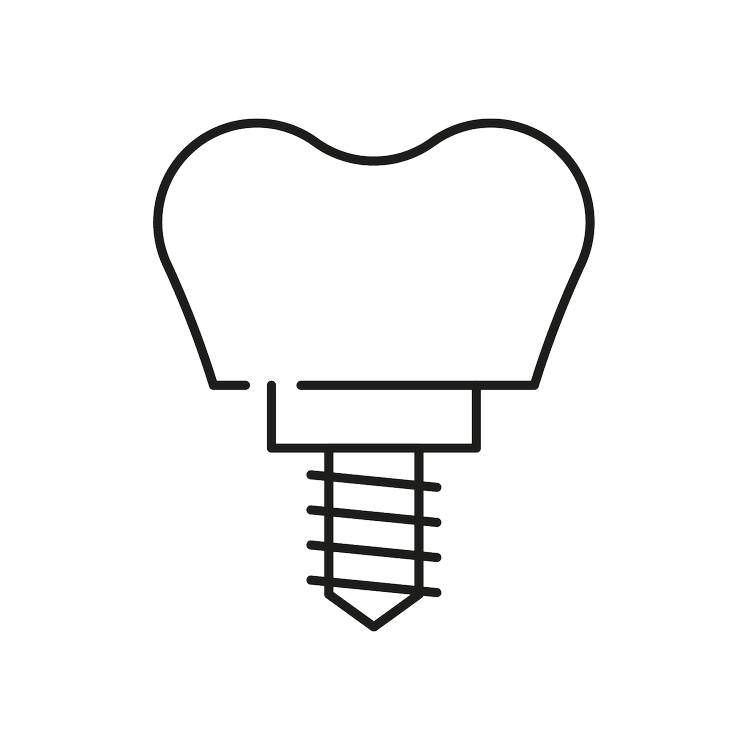
Dental implants are a modern, well-established way to replace missing teeth for the long term. Unlike traditional bridges or removable dentures, implants are securely anchored in the jawbone and can feel remarkably close to natural teeth—both in stability and function, and in how they look. For many people, they’re the go-to option when they want a comfortable, long-lasting solution that looks and feels natural.
Dental implants are usually made from titanium or ceramic—materials that are generally very well tolerated by the body. They act as an artificial tooth root and provide a stable foundation for crowns, bridges, or even full dentures. One of the biggest advantages is that implants help protect neighbouring healthy teeth, because there’s no need to reshape them the way you often would for a bridge.
What happens during fully guided implant placement?
Fully guided implant placement is carried out in a few carefully planned steps. Every case is tailored to your anatomy and to what matters most to you—so the procedure feels predictable, safe, and well thought through.
-
Assessment and planning
We start with a thorough assessment. Using a 3D scan (CBCT) and a digital impression taken with an intraoral scanner, we can evaluate your jaw situation very precisely on the computer. These data form the basis for planning the exact implant position—helping us reduce risks, avoid complications, and achieve the best possible functional and aesthetic result. -
Implantation
The procedure itself is done under local anaesthetic and is usually very well tolerated. Using a custom-made surgical guide, the implant is placed precisely into the jawbone. Over the healing phase, it bonds firmly with the bone (osseointegration). Depending on your starting point, a bone graft may sometimes be needed if there isn’t enough bone volume to support the implant securely. -
Healing phase
This healing phase usually takes around three to six months. During that time, the implant is typically protected from heavy load so it can integrate securely. In some cases, immediate loading may be possible—your dentist will decide this on an individual basis. -
Implant exposure and taking the impression
Once the implant has healed successfully, we uncover it and place a small component called a healing abutment (sometimes referred to as a gingiva former). Around a week later, we can usually take a precise digital impression with an intraoral scanner—quickly, comfortably, and without triggering a gag reflex. If the implant was placed to heal in an open approach, uncovering isn’t necessary, and we can often scan straight after the healing phase. -
Fitting of the final restoration
Your custom-made restoration—such as a crown, bridge, or denture—is then fitted precisely onto the implant, either screw-retained or cemented, depending on what’s best in your case. The new tooth is shaped and shaded to blend in naturally with the rest of your smile, so it looks and feels as close to a natural tooth as possible.
What are the benefits of dental implants?
-
A natural chewing sensation:
Dental implants can let you eat and speak much like you would with natural teeth—without the wobble or insecurity many people associate with removable options. -
Stable, long-lasting, and secure:
With good care, implants can last for many years or even decades. -
Helping preserve the jawbone:
Because implants transfer chewing forces into the jawbone, they can help slow down bone loss over time. -
Protecting neighbouring teeth:
Unlike a traditional bridges, implants usually don’t require the healthy neighbouring teeth to be reshaped. -
Aesthetics:
Implant-supported restorations look and feel very natural—helping you smile with confidence again.
Care and aftercare
Just like natural teeth, dental implants need good daily care and regular dental check-ups:
-
Daily care:
Brushing twice a day and cleaning between the teeth with interdental brushes or floss helps prevent plaque build-up and keeps the gums healthy. -
Regular check-ups:
During your routine examinations, we also keep an eye on your implants and may take X-rays if needed. We also recommend regular professional cleanings to help keep the gums around the implant healthy and the implant stable long term.
Possible complications
Dental implants are generally a very safe treatment option, but, as with any procedure, complications can occasionally occur. These may include:
-
Peri-implantitis:
This inflammation of the tissue around an implant is usually caused by bacterial plaque. It is similar to periodontal disease and, if left untreated, can lead to implant failure. When detected early, it can usually be treated effectively. -
What to avoid:
Inconsistent or poor daily care can lead to inflammation and, in some cases, implant failure. Smoking also increases the risk of complications significantly.
Conclusion
Dental implants are a modern solution for missing teeth that can look natural and feel stable in everyday life. They offer a secure bite, can help preserve the jawbone, protect neighbouring healthy teeth, and make chewing feel much more like it used to. With careful digital planning, high-quality materials, and experienced clinicians, implant placement is now a well established routine procedure. With good daily care and regular follow-up, an implant can last for many years, and often for decades, helping you regain comfort and quality of life.
Book an appointment and get a free consultation.